As a chef, I get more than a little crazy at the dishonest claims made about kitchen equipment, none more so than cutting boards.
They are essential part of any kitchen and yet many people are very confused about the best one to buy.
I’m not here to recommend a specific brand of cutting board but if you read this article and or watch the whole of the video below you will be able to make an informed choice about your next cutting board and learn some tips on how to look after it.
Types of Cutting Boards
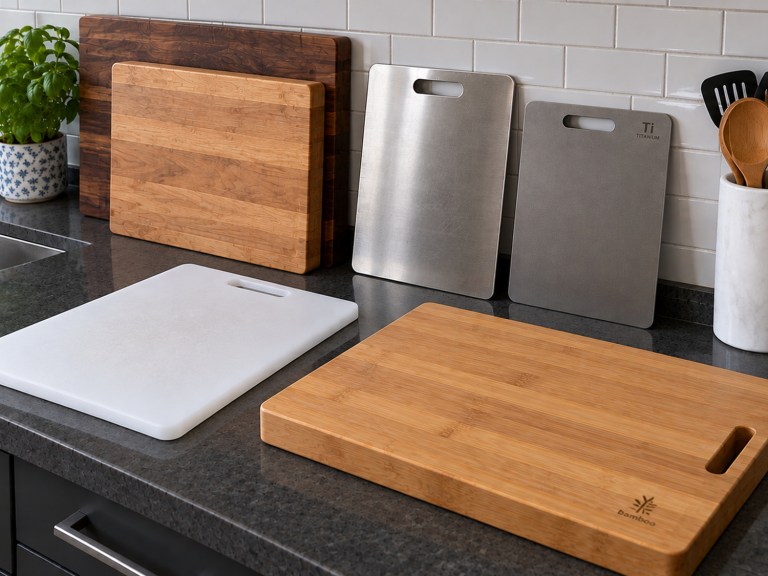
Cutting boards are made from plastic, bamboo, hardwood, steel, and even titanium….so first let’s talk honestly about each type.
Plastic boards
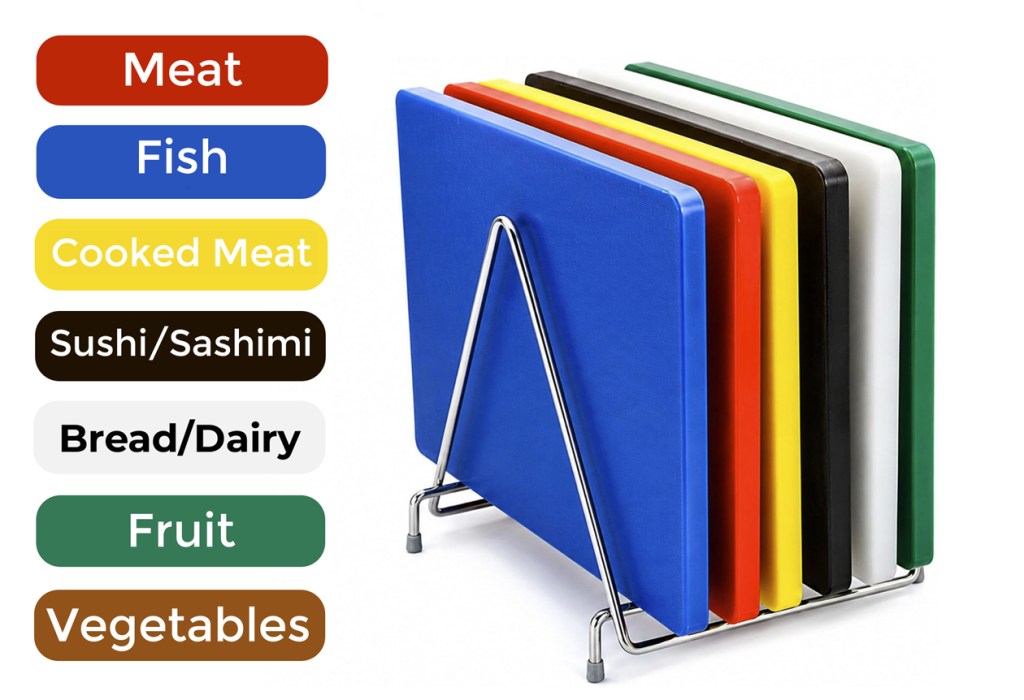
Plastic cutting boards are widely used in professional catering particularly because they can be colour coded and this is meant to prevent cross contamination (such as using the same cutting board to cut up salad after cutting up raw chicken). The downside of plastic cutting boards is that they can retain grease even after being put through the dishwasher, and the knife cuts in the board can harbour bacteria.
Eventually many thinner plastic cutting boards (less than ½ inch) can warp so they no longer sit flat on your kitchen counter. There is also the issue of micro-plastics but so far there has not been enough scientific research, but this is an issue to keep in mind. Many of the plastic cutting boards sold to consumers are less dense and of a poorer quality which has caused the issue of shedding and thus concern about micro-plastics.
Bamboo
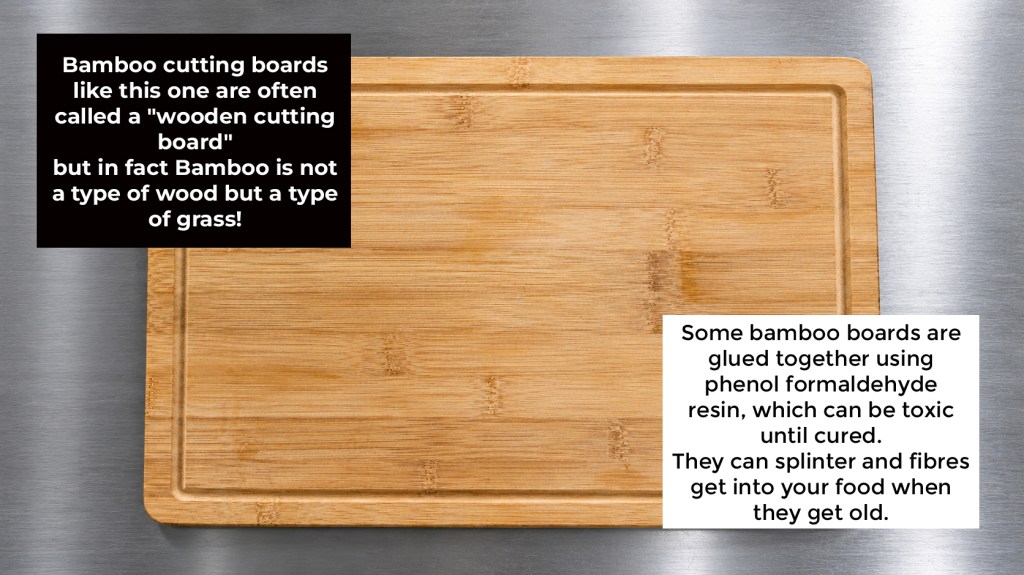
Just to clarify, bamboo is not wood, it is a type of grass but often it is described as a wooden cutting board. Sellers claim it is sustainable, but what they don’t tell you is over time the fibres of the bamboo can break off and could get into your food.
Bamboo boards also contain significantly more silica than traditional hardwoods and this high silica content helps to blunt knives. Also, some bamboo boards are glued together using phenol formaldehyde resin, which can be toxic until cured and not all Bamboo board sellers specify what kind of glue has been used in the manufacturing process.
Stainless Steel and Titanium
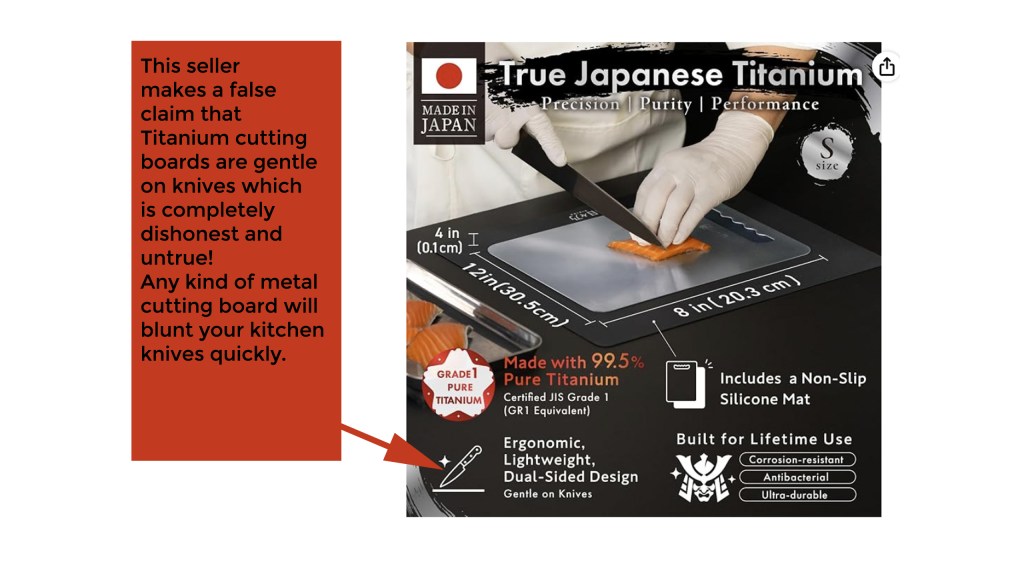
In recent years unscrupulous sellers have promoted the use of stainless steel or even Titanium cutting boards, making false statements like: they are more hygienic than hardwood and even ridiculous claims that they are gentle on knives.
But the truth is if metal was more hygienic and a safer material to use for cutting boards then the catering industry would use them and they do NOT.
Not only are they less hygienic but they blunt your knives quickly and a blunt knife is likely to cause more accidents.
If you search on the internet you can find ads such as this one that claim their cutting boards are made from pure titanium but in the same ad state that the cutting boards are made from 304 stainless steel, so let me be clear…..titanium is a completely different metal than stainless steel.
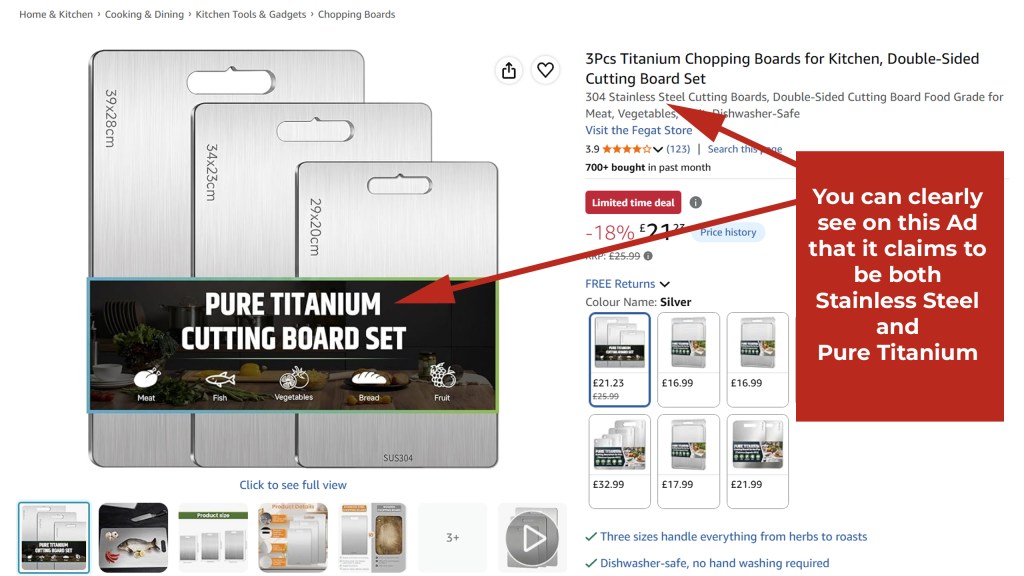
You won’t find any celebrity chef recommending titanium or stainless cutting boards, they all agree with me that a metal cutting board is unsafe and damages your knives.
End grain
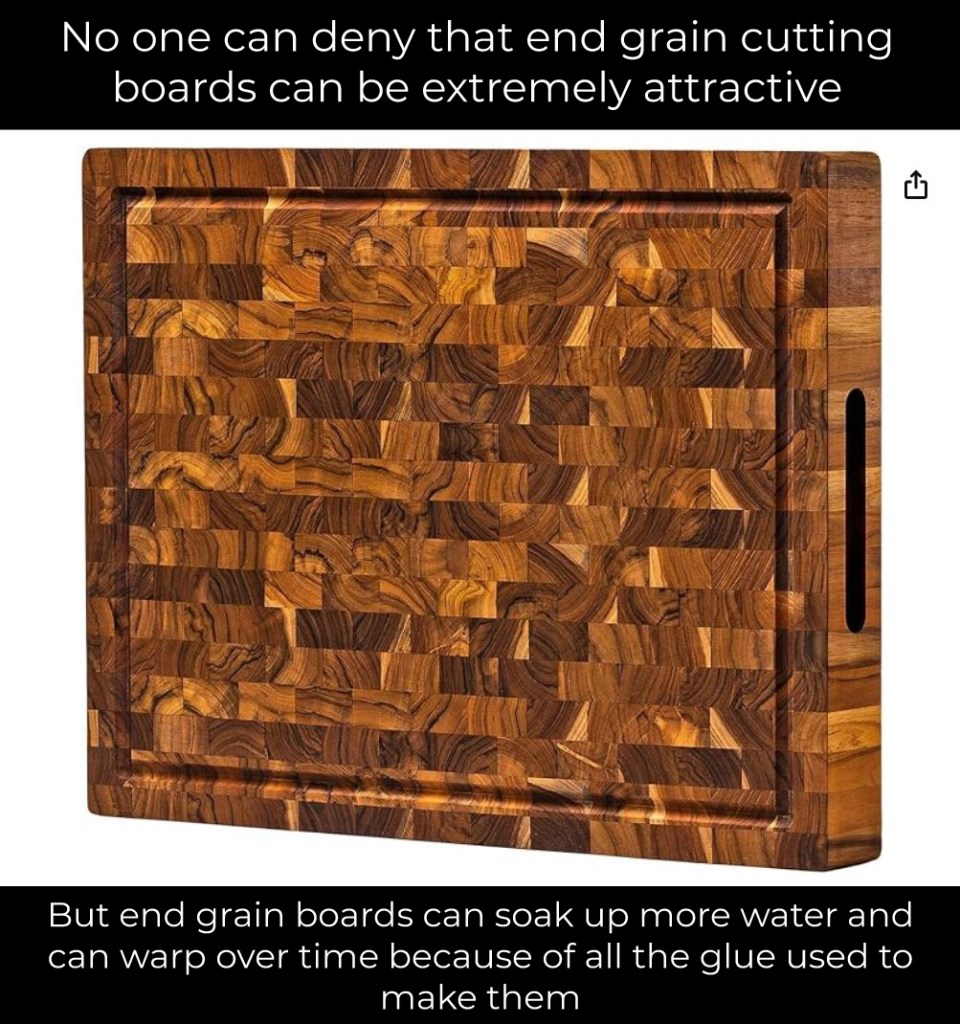
End grain cutting boards also know as butcher block cutting boards can look amazingly attractive and because of that they are a popular choice for foodies, but they can warp over time due to the way they are constructed; lots of pieces of timber often of different types of wood are cut into small pieces and then glued back together to create a very artistic pattern. But if they get too wet or are left soaking in a sink the glue can come undone which can crack or warp the board.
The origins of Butcher block boards is from Butcher shops and the cleaning process is quite complex because blocks were never meant to be placed in the sink: first they scrape the surface; then they brush the grain; wipe with hot water and mild detergent; then sanitise and finally wipe away all standing water and leave the block to air-dry completely. This means if you choose to buy an end grain cutting board be sure to read carefully the seller’s advice on cleaning and maintenance.
Hardwood
So my choice of cutting boards for the last 9 years has been hardwood long grain cutting boards so let me tell you why.
University and laboratory research in both America and Europe demonstrates that hardwood cutting boards be that maple, oak, beech, ash, teak and others) can be as hygienic—or safer—than plastic boards because wood features natural capillary action and bactericidal properties that cause trapped microbes to die off as the board dries.
Basically, Hardwood cutting boards kill bacteria. Wood binds up water which bacteria needs to grow. Wood also contains antimicrobial compounds. Oak showed the highest decrease rate in bacteria, followed by beech and ash. I will post links to these scientific studies below this article.
So which wooden cutting board should I choose?
So now you know that hard wood is the best and most hygienic material for your cutting board let’s talk about the best types you can buy. The ones that are easy to maintain, won’t warp, and will last for years.
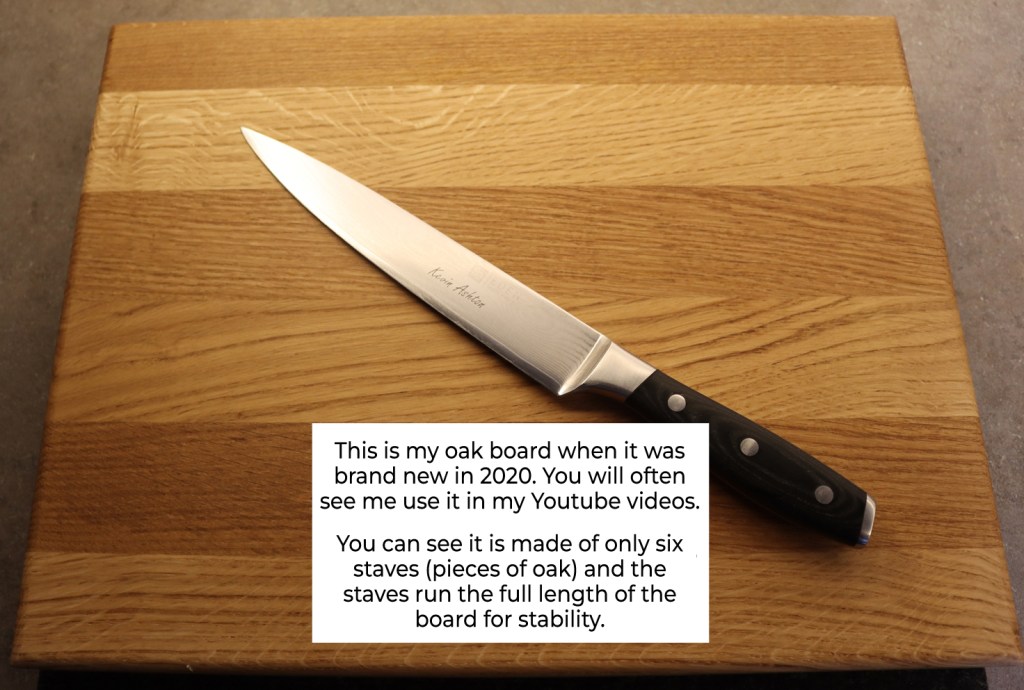
Look for a hardwood board where the grain runs lengthwise. Ideally the fewer pieces of timber in the board makes it more stable. Look for boards where the staves run the length of the board unlike some cutting boards made from leftover countertops.
No Rubber Feet
Don’t buy a board with rubber feet because that just stops you from using both sides of the board. Instead, use something like a non-slip rubber mat or even a sheet of paper towel made wet to stop the board from slipping.
Size Of Your Cutting Board
Since you cannot put your wooden cutting board into the dishwasher, you need to wash it by hand. Therefore deciding what size to buy can depend on the size of your kitchen sink. You need to be able to get at least half of your cutting board in your sink to make it practical to clean. So I suggest a size of about 40 cm (15 3/4″) in length and a depth of about 30 cm (12 inches “) and about 4 cm in thickness (1.5inches). This is big enough to be practical but still easy enough to manoeuvre to clean.
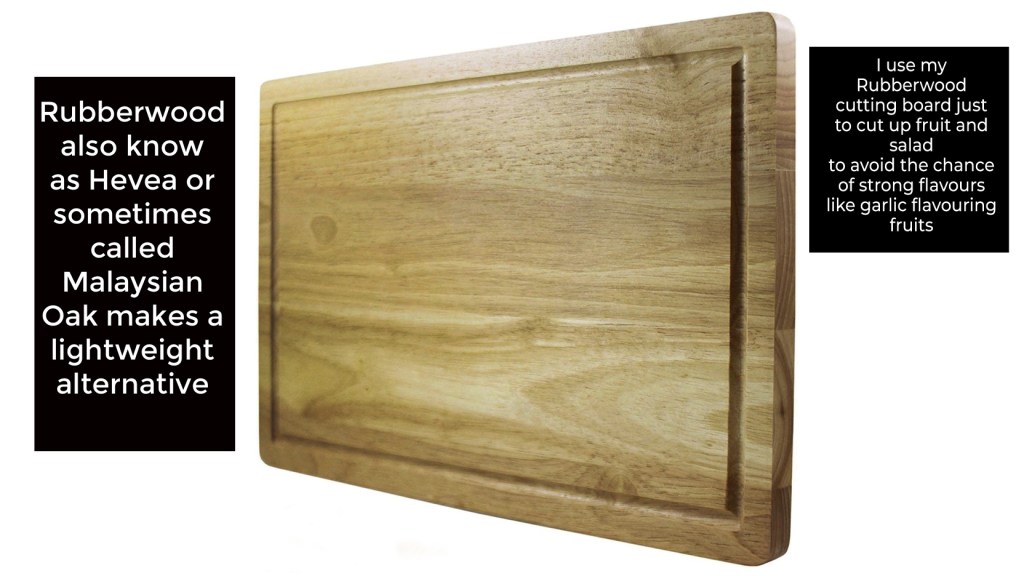
If weight is an issue then a thinner board made from a lighter hardwood such as rubberwood is a good alternative.
Cleaning your Wood Cutting Board
1.) Scrub the cutting board with hot clean soap and water (to get out any food debris in the scratches or grooves on the board’s surface).
2.) Sanitise the board using a mild bleach solution (1 Tbsp per gallon of cold water). I mix the solution and then pour some into a clean empty spray bottle. I spray the clean board, leave for a couple of minutes then rinse well with clean water. You can use an antibacterial spray instead, as long as it states on the bottle it is food safe. For UK readers this is the one I use, so shop around for the best price.
3.) Then pat off the excess moisture with a paper towel and allow to air dry completely (I like to place my clean board on my dish rack, or trivet to allow air to circulate around it).
Airdrying your Clean Cutting Board
After washing and sanitising your cutting boards it is important to air dry them by standing them on the edge before putting them away
Do you need more than One cutting board?
I recommend you buy at least 2 cutting boards if you can afford it because then have chance to properly dry before using again.
Oiling the Cutting Board
With all wooden cutting boards, it is important to rub them down from time to time, with food grade mineral oil to stop them from absorbing too much water when you are cleaning them. Food grade mineral oil can be relatively expensive, although during my research I did discover that prices vary widely, so shop around. Make sure the mineral oil is food grade. I found one on eBay for UK readers. For American readers there is plenty of choice on Amazon, just be sure it states it is food safe. It is important to store the mineral oil in a cool dry place to prolong its shelf life, if the oil becomes rancid it will need to be replaced.
My own cutting boards
I own three cutting boards one is beech, one is oak and one is rubberwood. The beech and the rubberwood boards are both 9 years old and the oak I bought in 2020 so it is 6 years old. All still working perfectly, not warped, not split. I have hand sanded the beech and the oak board just once and just use food grade mineral oil to maintain them.
Conclusion
I hope you found this article and video helpful.
The internet is like the Wild West and it will continue to scam people if they are not well informed so make sure you share my video with friends and family.
If you have any questions about cutting boards or if there is another type of kitchen equipment you would like me to talk about please let me know!
Here are some links to the scientific research mentioned in my article and video.
Hygienic Evaluation of Wooden Cutting Boards 2025:
https://pubmed.ncbi.nlm.nih.gov/40609863/
Food safety researchers Dr. Dean O. Cliver and Nese O. Ak at the University of Wisconsin 1994:
https://www.sciencedirect.com/science/article/pii/S0362028X25001280
Danish Technological Institute:
https://www.fefpeb.eu/cms/files/2016-02/danish-technological-institute-good-hygiene-starts-on-a-chopping-board-of-wood.pdf
Survival of bacteria on wood and plastic particles: https://www.researchgate.net/publicat…
Information on the high silica content in Bamboo cutting boards:
https://thisisroo.com/blogs/buying-guides/bamboo-vs-wood-cutting-boards
Which is more hygienic – wood or plastic?
https://www.talenta.at/en/chopsticks/wood-and-hygiene

