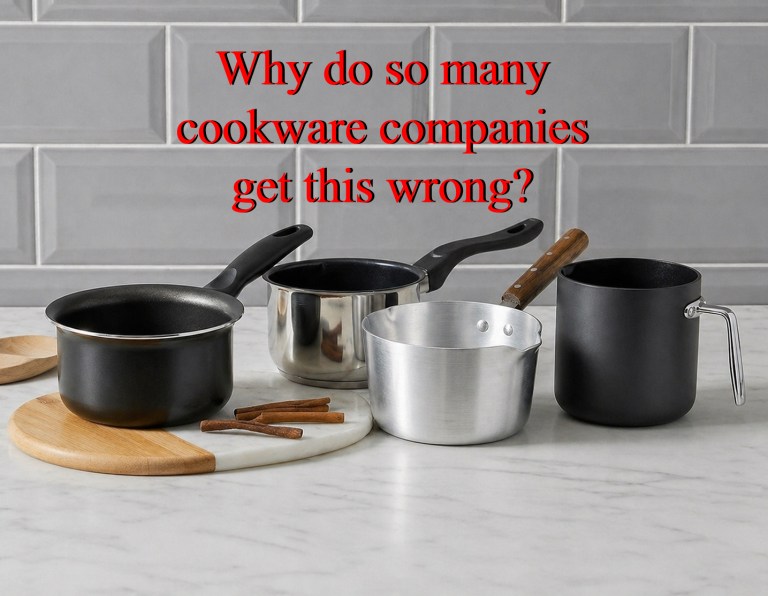
I first wrote this post back in 2022 but the situation has not changed, so I decided to create a short 4 minutes video on my YouTube channel to share my thoughts and recommendations on milk saucepans.
A milk pan seems like a simple thing to design and get right, so why do so many cookware manufacturers get them wrong? Currently most milk saucepans are too shallow making it far too easy for the milk to boil over. Whether you are a home cook or a professional chef, chances are you have experienced milk boiling over on your stove and the subsequent clean up.
Design Flaws
Manufacturers of kitchen equipment rarely consult professional chefs about their designs and that is why far too many of the milk saucepans in the world are too shallow. Why designers haven’t figured that one out is hard to understand. After all milk and cream expand at a very rapid rate once they get close to boiling point.
Price Isn’t Everything
Currently you can pay from £3.50 ($4.75) up to £149 ($197) in the UK for a milk saucepan but more expensive doesn’t mean better.
What Not To Look For
Don’t buy an aluminium milk pan because whilst they may be cheap, aluminium can taint the flavour of milk and cream based sauces.
Don’t buy milk saucepans with wooden handles because eventually the wooden handle will become scorched and then become loose and unsafe.
Equally, don’t buy milk saucepans with black bakelite handles because bakelite is a form of plastic and it will eventually become brittle and make the handle unsafe.
If you watch my video you will notice that I don’t actually recommend a particular brand or model of milk saucepan and this is for several reasons e.g. What you can buy in the UK isn’t always available in the US and vis versa. The other reason is both times I have written about milk saucepans the cookware companies suddenly stop selling the one I have recommended so it is easier to just talk in general terms of What Makes A Good Milk Saucepan.

